
Loading stories…Inapakia habari…
Loading stories…Inapakia habari…
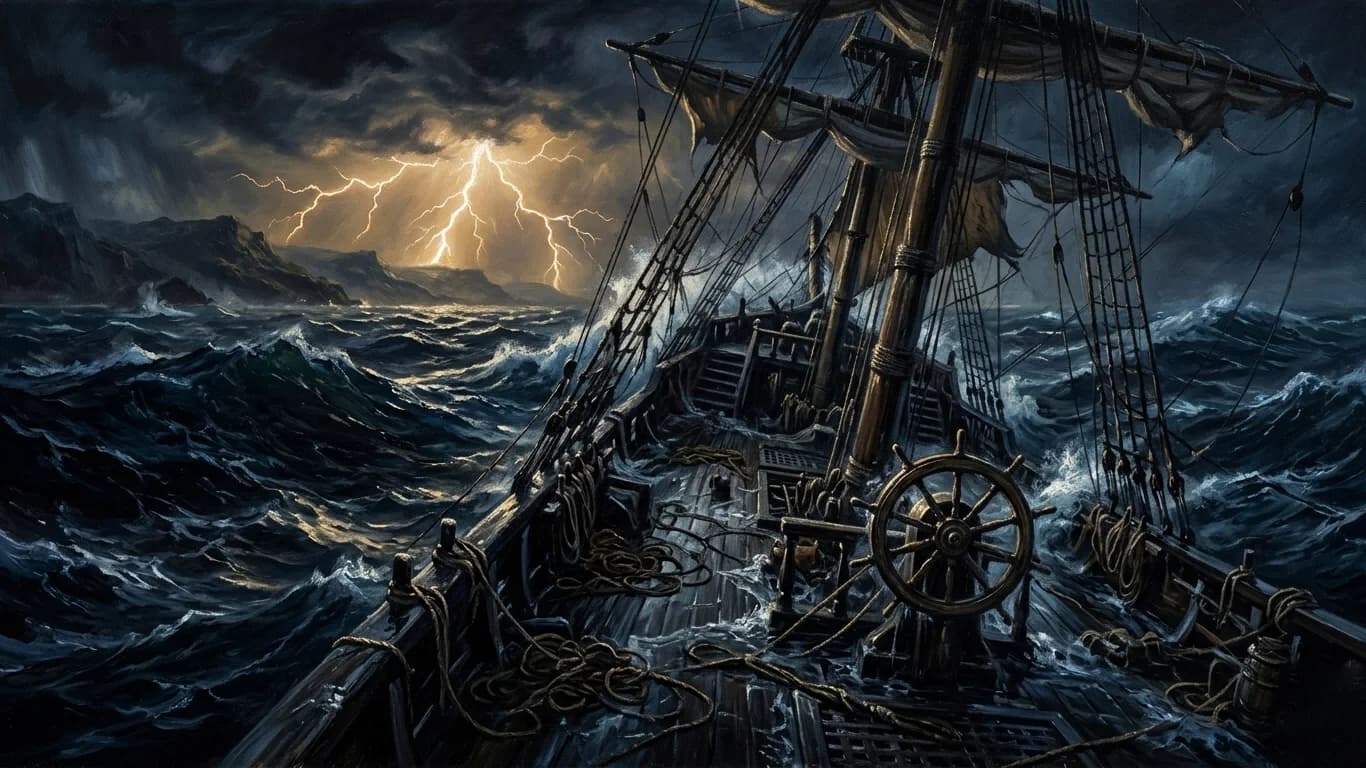
Who Should Steer the Ship? Plato's Ancient Warning and Kenya's Modern Crisis
Na Kevin Kabingu · The Agora · 23 April 2026
Imagine you are on a ship in the middle of the Indian Ocean. The sky has collapsed. A storm is coming, the kind that turns the horizon black before it arrives. The vessel is groaning. And someone is asking the question that determines everything: who takes the wheel?
Do you call a vote?
Or do you hand the helm to the one person on board who has spent a lifetime reading the stars, charting currents, and navigating through precisely this kind of night?
This thought experiment is not new. It is 2,400 years old, born in the mind of Plato, tucked inside The Republic, and it is, perhaps, the most unsettling political metaphor ever written. More unsettling still, because, as we watch Kenya lurch toward the 2027 elections in a sea of broken promises, impeached deputies, teargas clouds and a generation of young people asking why we should even vote? The allegory feels less like ancient philosophy and more like this morning's news.
The Navigator Nobody Votes For
Plato's point was brutally simple. Democracy, he argued, treats leadership like a popularity contest. It does not ask who is most capable? It asks who do we like most?
The navigator, trained, careful, truthful, will rarely win such a contest. He is the kind of person who will tell you the hard thing: that the storm is severe, that making it through is uncertain, that we need to conserve resources and stay calm. He does not make for good theatre. He doesn't know how to work the crowd.
So who wins the vote? The loud man. The charismatic one. The one handing out free wine and assuring everyone that everything is under control, that he knows exactly where the rocks are, that this ship is the finest ship, that they are all going to be absolutely fine. He has never held a compass in his life. But he holds the room.
Plato's conclusion, uncomfortable as it is, was this: democracy navigated by charisma alone tends to end with the ship on the rocks.
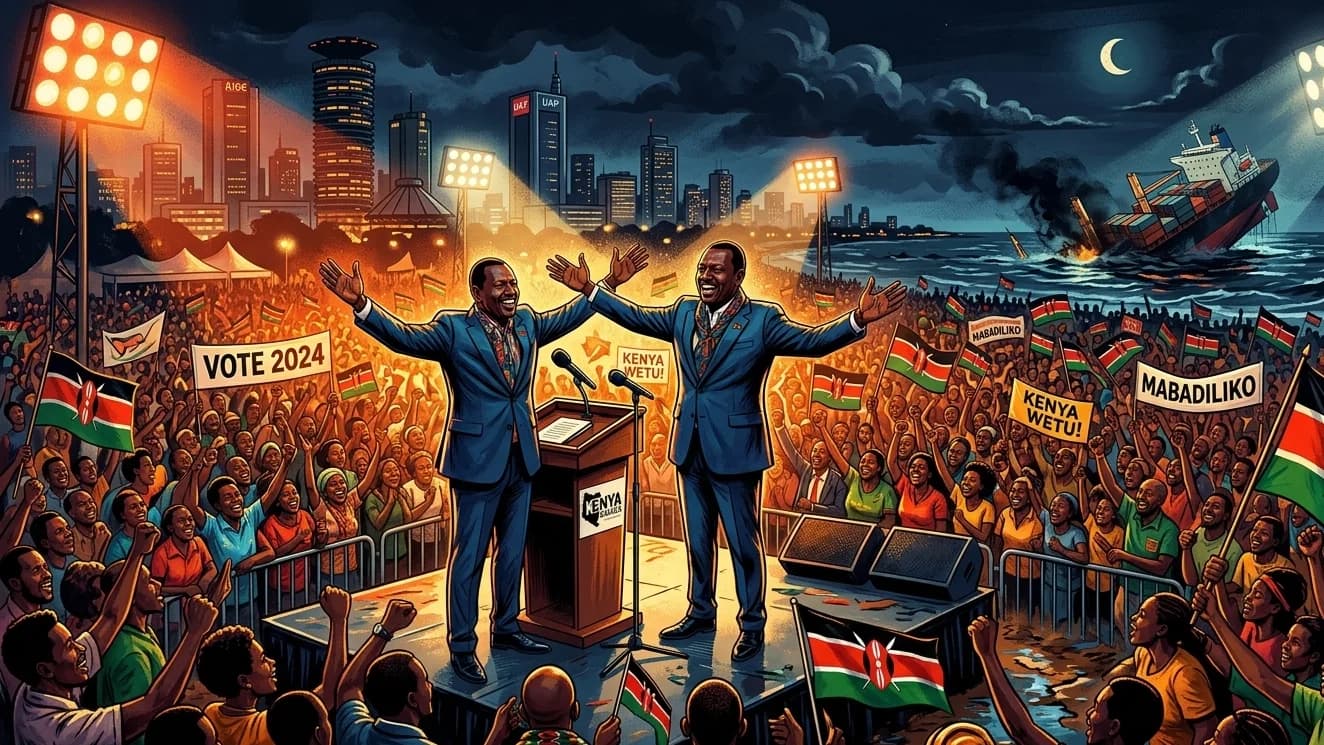
The Kenyan Ship, Right Now
In Kenya, we have been in the storm for some time.
President William Ruto, elected in 2022 under the Kenya Kwanza coalition, arrived at State House with a promise: bottom-up economic transformation, a government for the hustler, the small trader, the boda boda rider. It was an extraordinary political narrative, one of the most effective populist campaigns this country has ever seen. And it worked, magnificently, at the ballot box.
Then the ship hit weather.
In June 2024, public dissatisfaction with Ruto's policies, particularly a set of tax increases in the Finance Bill, led to nationwide protests. Police responded violently, killing dozens and injuring hundreds. Under pressure, Ruto withdrew the Finance Bill and dismissed nearly his entire cabinet. He then, in a move that would have impressed even Machiavelli, co-opted the opposition party ODM into key strategic ministerial positions, turning rivals into partners overnight. Stability purchased, but at what cost to principle?
In October 2024, Parliament voted to impeach and remove Deputy President Rigathi Gachagua on charges of corruption and ethnic incitement, a man who had been, just two years prior, the Vice-Captain of this very vessel.
And here is where Plato's metaphor gets particularly sharp.
The Man With the Wine: A Recurring Character
Consider the dramatis personae now assembling for 2027.
On one side, President Ruto, his administration rocked by public backlash over economic mismanagement, corruption and heavy taxation, yet a man who has never lost an election in nearly three decades in politics. He is not going quietly.
On the other, a gathering coalition of the aggrieved. His former deputy Gachagua has teamed up with political heavyweights including Kalonzo Musyoka, Eugene Wamalwa, Martha Karua and Fred Matiang'i to forge a united front.
And yet, look closely at this opposition. In what appears to be a calculated pivot to the populist lane Ruto once occupied, Gachagua said his new DCP party would be the party of the "unheard", especially youth and rural voters who feel betrayed. The man who was the establishment is now performing as the insurgent. The wine is the same; only the hand holding the goblet has changed.
A recent Infotrak survey shows President Ruto commanding a 28 per cent popularity rating, followed by former Interior Cabinet Secretary Fred Matiang'i at 13 per cent and Kalonzo Musyoka at 12 per cent, with 27 per cent of Kenyans polled undecided, throwing the race wide open.
Among those quietly in the mix: former Chief Justice David Maraga, at two per cent. Former Interior Cabinet Minister Fred Matiang'i and Busia Senator Okiya Omtatah are also exploring potential candidatures, hoping to capitalise on a wave of public discontent with the political elite.
Matiang'i and Omtatah. Now there are navigators.
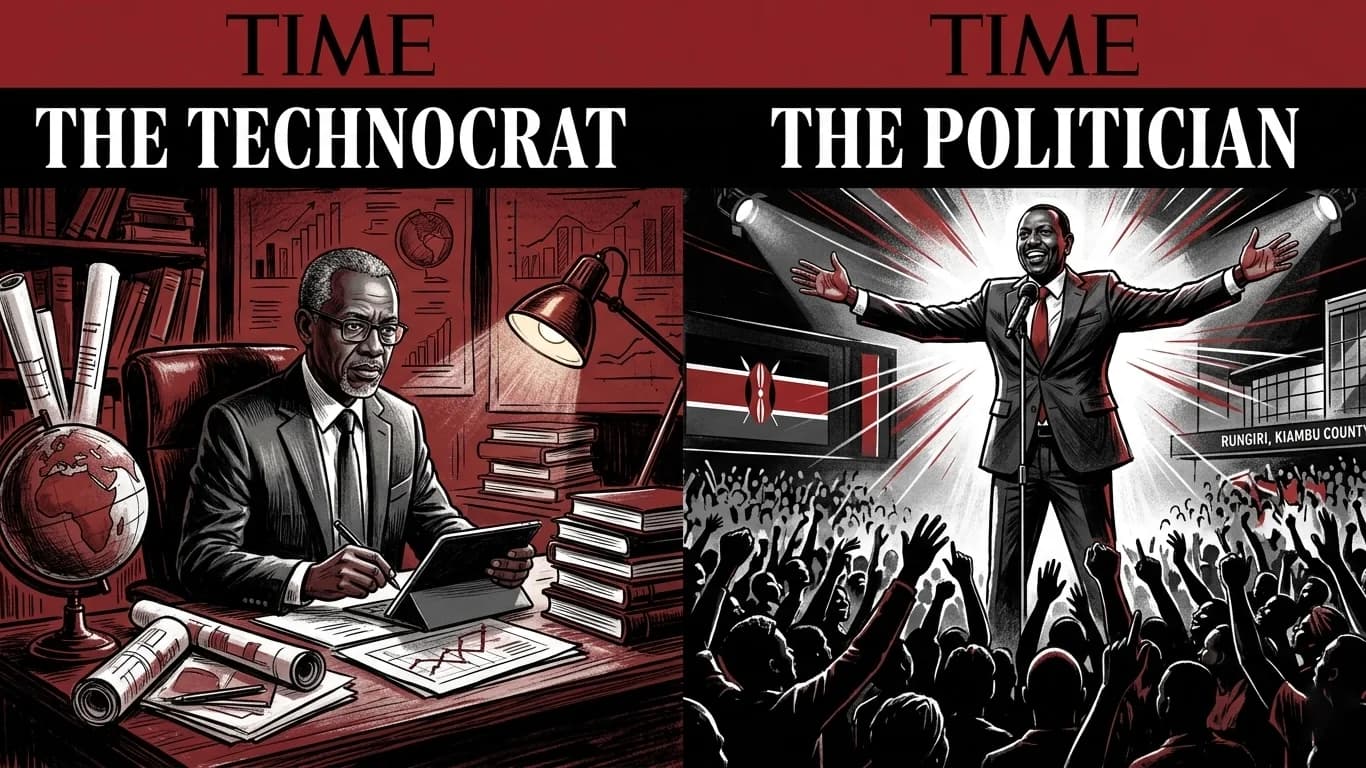
The Technocrat Problem
Plato did not say the navigator was wrong. He said the navigator was unelectable under pure democratic conditions.
This is Kenya's precise dilemma. The people who arguably understand the instruments best, the economists, the jurists, the technocrats, the constitutional scholars, tend to poll at two per cent. They speak in full sentences. They present budgets. They do not promise miracles. They are incapable of the theatrical warmth that Kenyan electoral politics demands.
Meanwhile, ethnicity, money and legacy networks still dominate electoral success. As constitutional lawyer Waikwa Wanyoike has noted, the system doesn't exclude capable newcomers because there are too few of them; it excludes them by design.
The hustler narrative of 2022 was genius, not because it was policy, but because it was poetry. It gave people an identity, a tribe that cut across the old tribal lines. We are the hustlers. It moved millions. And when the policies attached to that poetry turned out to be Finance Bills and rising fuel prices, the poetry curdled.
The protests against the Finance Bill were not merely reactions to specific policies; they represented long-standing grievances regarding government corruption and a lack of opportunities for young people. What started as a protest against taxes evolved into a show of public anger with what many Kenyans see as a corrupt leadership that does not adequately acknowledge their struggles.
Gen Z did not march for a navigator, either. They marched against the man who had promised to be one.
The Gen Z Paradox
Here is the most interesting chapter in our story.
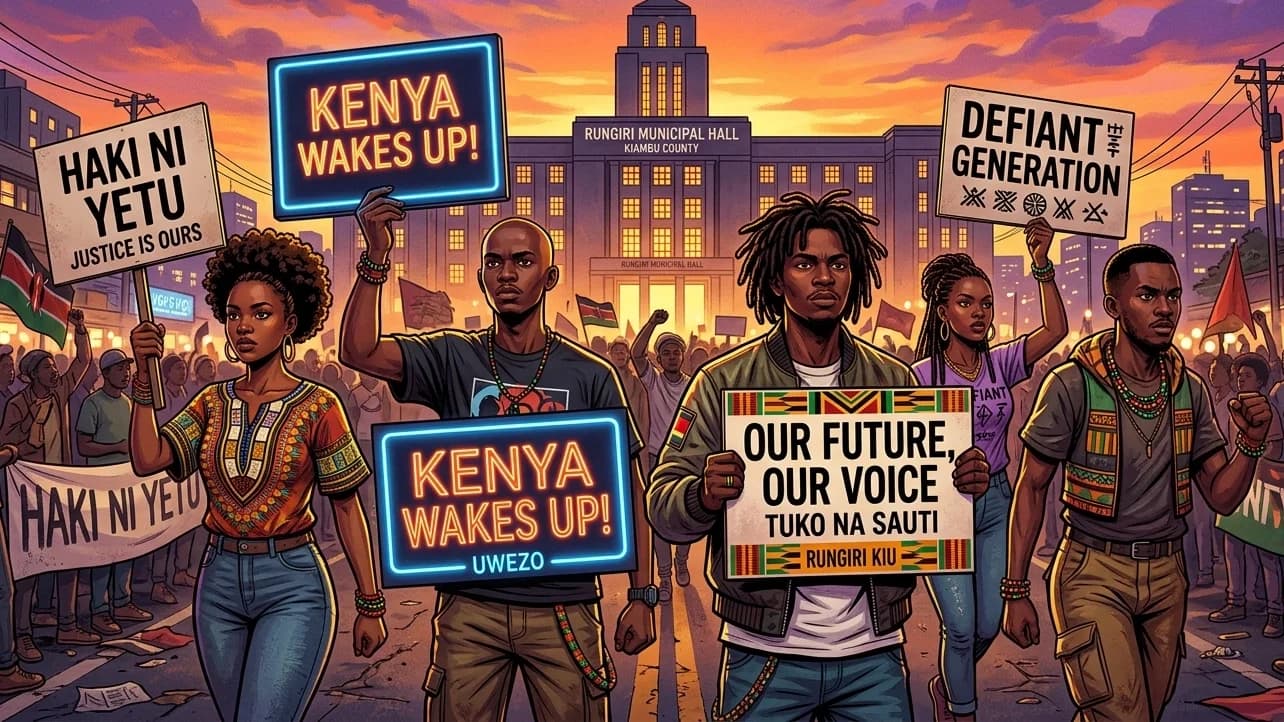
Kenya's political landscape has been profoundly reshaped by the emergence of Generation Z, Kenyans born between the late 1990s and early 2010s, who are increasingly vocal about their demands for accountability, transparency, and social equity. Their mobilisation against perceived injustices poses significant political risks to the current government.
The Gen Z protests were, in Platonic terms, the crew mutinying, not to hand the wheel to the navigator, but to throw the reckless man overboard. What happened next is telling.
The protests forced President Ruto into a significant policy reversal. He scrapped the controversial Finance Bill and reshuffled his cabinet to create a more inclusive government, with accountability delivered not through the ballot but through the streets.
And yet, a growing temptation among youth is to abandon electoral politics altogether. Frustrated by broken promises, rising unemployment and a cost-of-living crisis, some have adopted abstention as a form of protest.
This is the paradox: the generation most capable of demanding qualified, accountable leadership is the generation most tempted to walk away from the very mechanism that would install it. If they disengage, the ship does not sit still. It keeps moving — steered, as always, by the man with the wine.
So, Benevolent Dictator, or Imperfect Democracy?
Plato eventually landed somewhere uncomfortable: that a philosopher-king, a ruler of genuine wisdom, unconstrained by the need for popularity, would govern better than a democratic assembly swayed by demagogues.
It is a seductive idea, especially when you have watched enough election cycles to feel the fatigue. And Africa knows what happens when that seduction is acted upon. The continent is not short of leaders who arrived as philosopher-kings and departed as plunderers.
Since independence in 1963, Kenya has oscillated from multi-party democracy to a one-party system, then back to multi-party. The 2007-2008 post-election violence was a critical juncture in Kenya's democratic trajectory, but the country bounced back through a power-sharing agreement that ushered in the constitutional reforms of 2010.
Kenya has already run the benevolent dictator experiment. It went badly. The one-party era produced not philosopher-kings but patronage networks so entrenched they still shape politics today. The 'strongman' is never as wise as he claims, and there is no mechanism to remove him when he isn't.
The answer, then, is not to abandon democracy, but to demand that democracy grow up.
Speakers at Kenya's Democracy Forum 2025 called for a shift from procedural democracy to one that delivers real social and political justice, warning that failure to reform electoral processes risks deepening public disillusionment.
That is the navigational challenge: not to replace the vote, but to change what the vote is asked to decide, and who is capable of winning it.
The Ship Has Not Sunk Yet
Despite persistent challenges, Afrobarometer surveys show a strong desire among Kenyans for progress, stability, and the continued improvement of their democratic system.
That desire is the thing worth protecting.
Plato was right that democracy can be gamed by the charismatic and the well-funded. He was not necessarily right that the solution is philosopher-kings. The solution, harder, slower, less dramatic, is an electorate that learns to tell the difference between the navigator and the man with the wine.
Kenya's young people showed, in June 2024, that they can smell a bad policy even when it is wrapped in a good slogan. That is a navigational instinct. The question for 2027 is whether that instinct translates into votes, and whether the people this country needs most will be willing to be on the ballot.
The storm is not over. The rocks are not far. But this ship has sailed through worse, and there are people on board who know the stars.
The question, as always, is whether we let them steer.
Marekebisho yenye vyanzo na majibu ya uwanjani, si mjadala wazi.
Hakuna majibu ya ushahidi bado.
Muktadha kutoka kwa majirani. Majirani waaminifu ni waliothibitishwa au wasimamizi wa kaunti.
Majadiliano
Mazungumzo na mjadala, yatafunguka ukiwa umesoma sehemu kubwa, au bofya hapa.
Maoni 0
