
Loading stories…Inapakia habari…
Loading stories…Inapakia habari…
Kiambu
Na Amina Waweru · Jamii ya Habari Huru · Kiambu · 31 March 2026
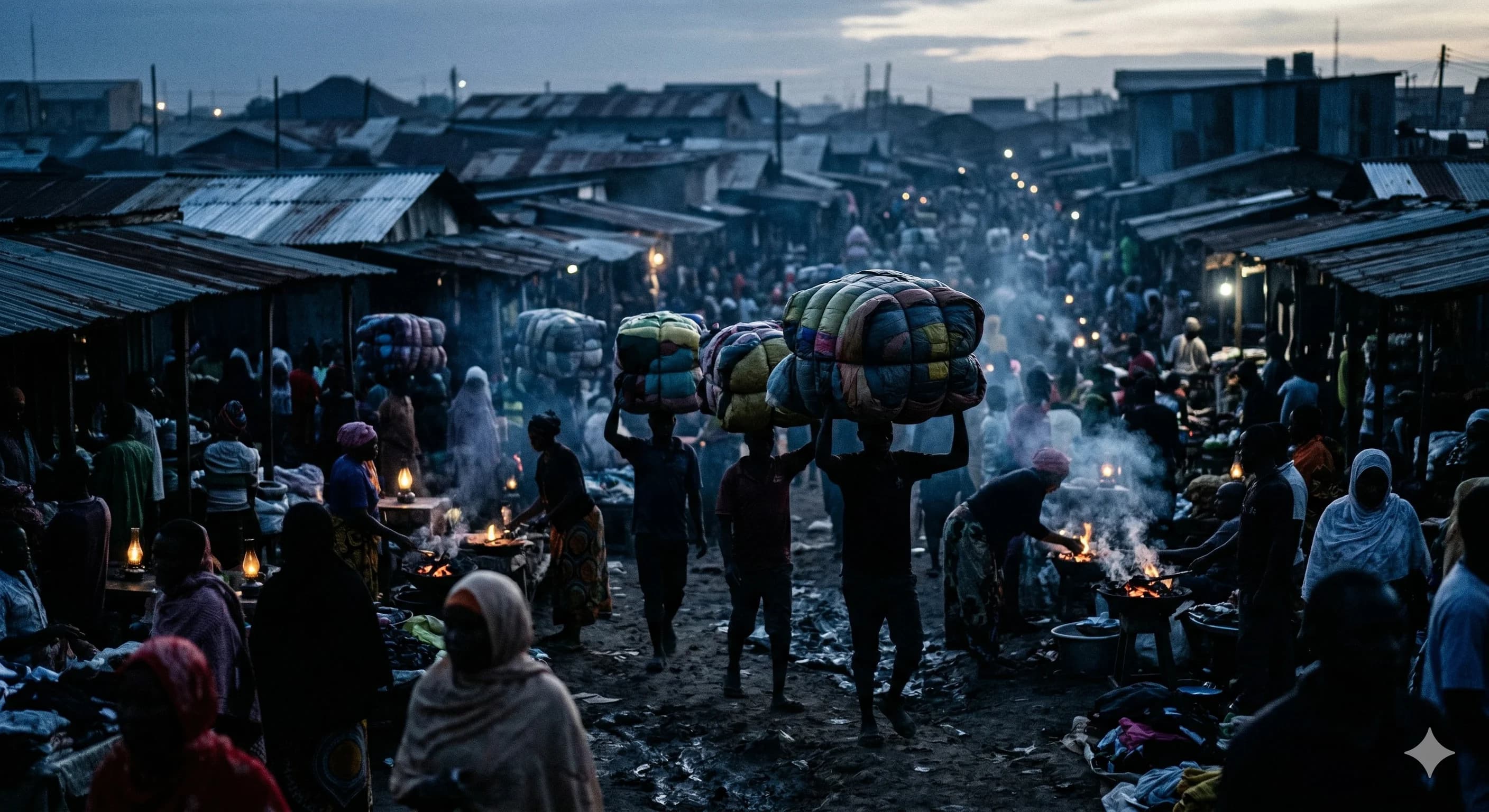
NAIROBI, KENYA — Before the city fully wakes, before the matatus begin their honking chorus along Mombasa Road, Gikomba is already breathing. Porters move in the dark with bales of clothes balanced on their heads. Vendors light jiko fires. The smell of mandazi and charcoal drifts across the corrugated iron rooftops. By 4 a.m., Africa's largest open-air secondhand market is already in full swing.
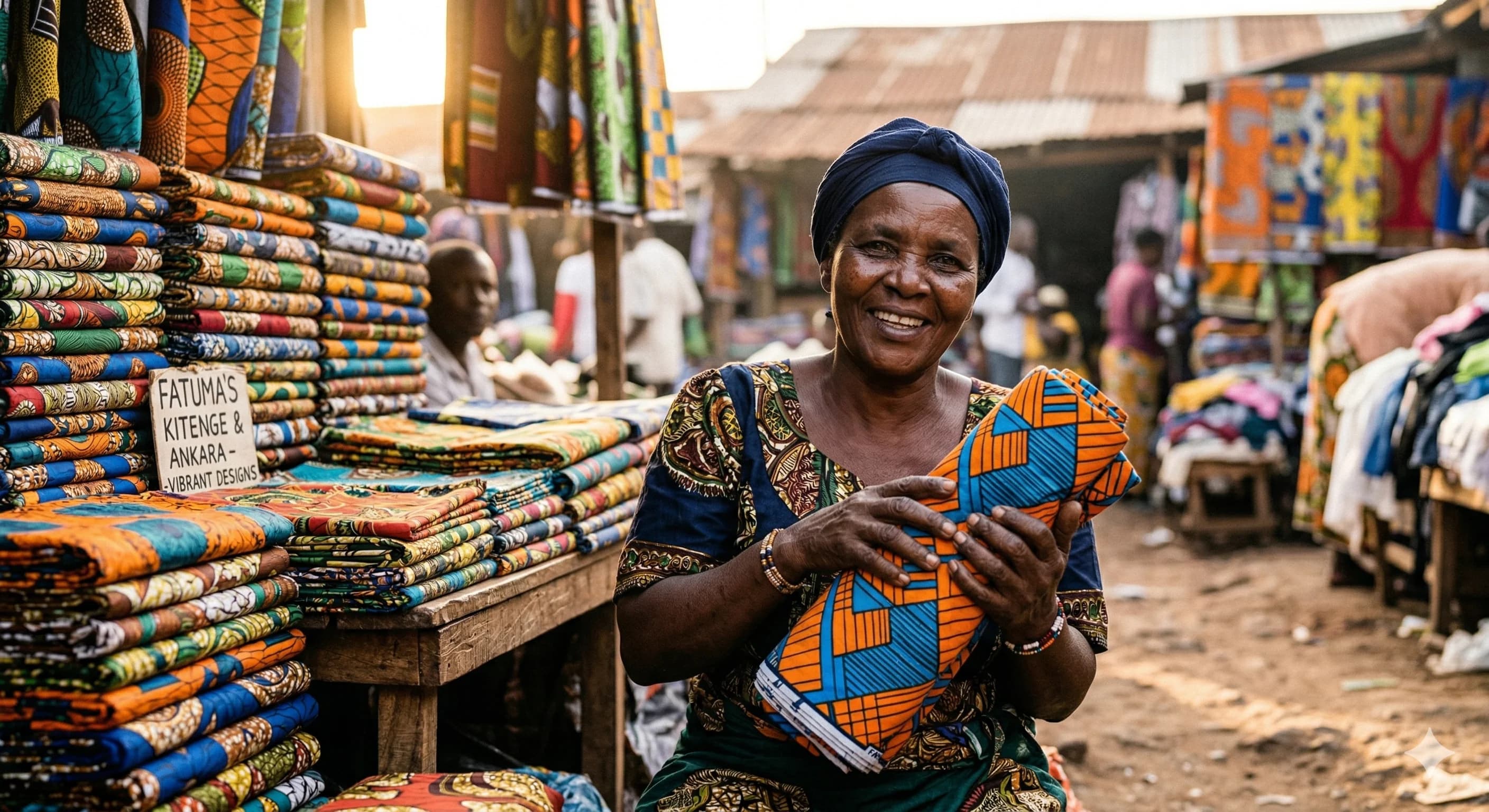
"This market raised my children, paid school fees, and built my house in Murang'a. Gikomba is not just a market. It is a life."
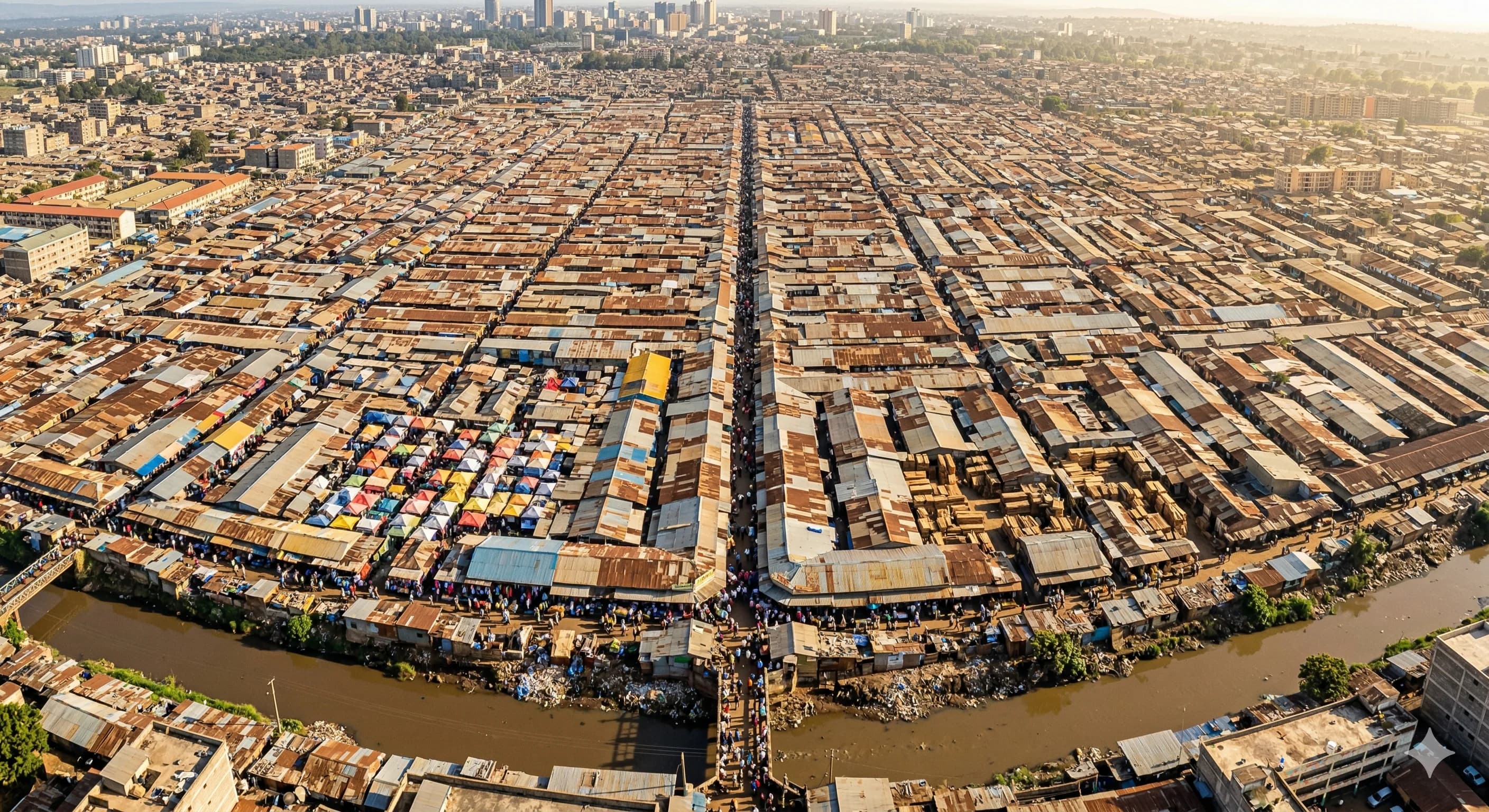
Stretching across more than 40 acres along the banks of the Nairobi River in the eastern edge of the city, Gikomba Market is a sprawling, chaotic, magnificent contradiction. It is filthy and fascinating. Overwhelming and essential. Every day, an estimated 65,000 people pass through its labyrinthine corridors of stalls — buyers, sellers, brokers, porters, pickpockets, tourists, and the merely curious.
The market deals primarily in mitumba — the Swahili term for secondhand clothing imported in compressed bales from Europe, North America, and increasingly, China. But Gikomba is far more than used clothes. It is a throbbing ecosystem: fresh produce in the outer sections, spare auto parts, secondhand electronics, traditional herbs, fresh meat, handmade leather goods, and tailors who will hem a pair of trousers while you wait.
Gikomba did not emerge from a city planner's blueprint. It grew organically in the 1970s as a refuge for traders who had been pushed out of more central Nairobi markets. The name itself is believed to derive from a Kikuyu word loosely meaning "a place where things are thrown," a nod to its origins as a dumping point for unwanted goods.
Over five decades, what started as a scattering of informal traders along the riverbank evolved into an institution. Today it contributes an estimated KSh 4.2 billion to Nairobi's informal economy annually, according to a 2025 report by the Kenya National Bureau of Statistics — a figure that experts say is likely a significant undercount.
| # BY THE NUMBERS | |
|---|---|
| Stat | Detail |
| 65,000+ | Daily visitors |
| 40 acres | Market footprint |
| ~15,000 | Registered traders |
| KSh 4.2B | Annual economic contribution |
| 3–5 a.m. | Peak bale-opening hours |
| 1970s | Market's approximate founding era |
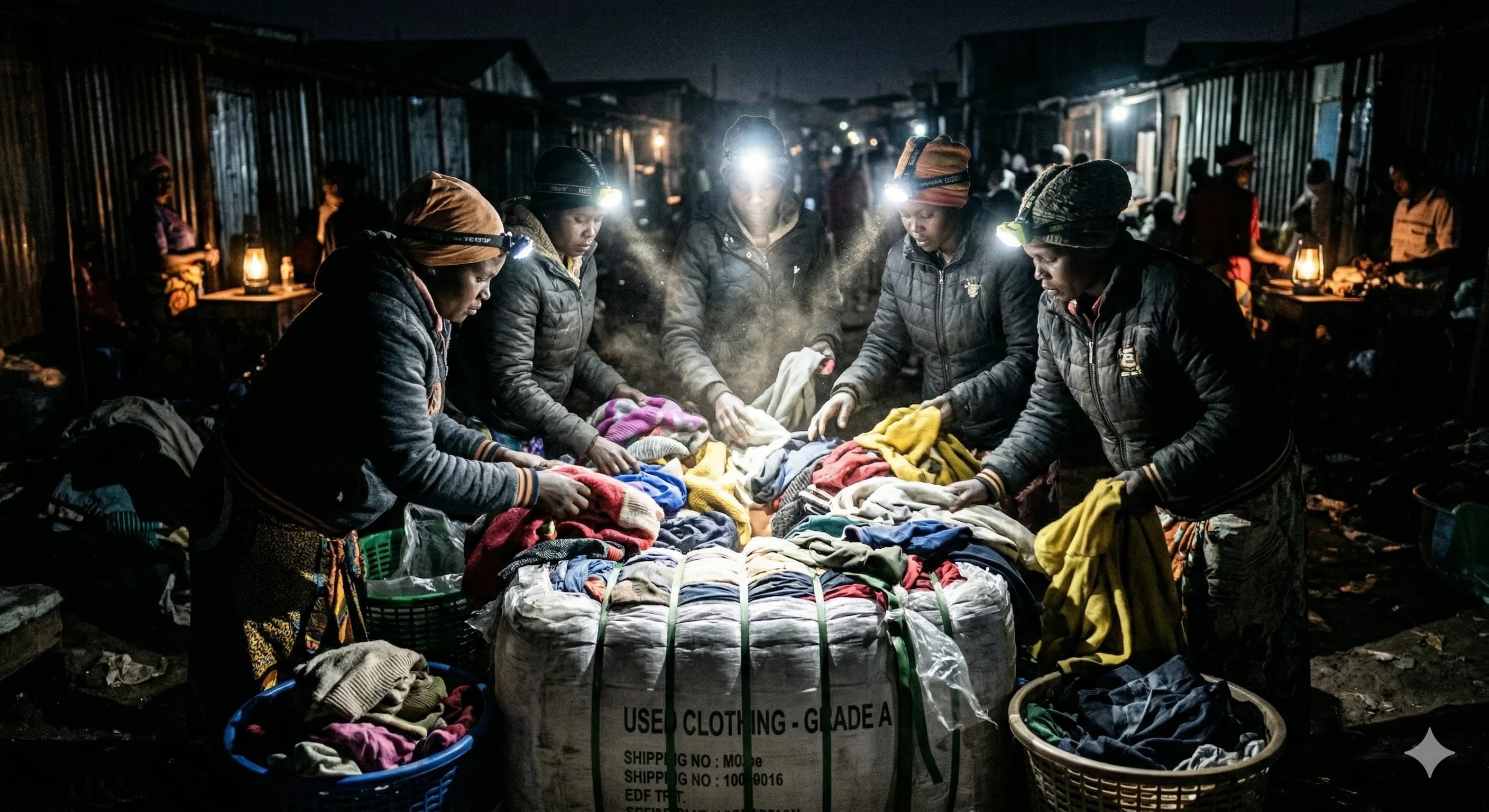
The heart of Gikomba's commerce is the bale. Compressed blocks of secondhand clothing — each weighing between 45 and 55 kilograms — arrive at Mombasa Port from overseas, transported by brokers and distributors who then sell them wholesale here. A single bale can cost anywhere from KSh 3,000 for low-grade mixed clothing to KSh 60,000 for premium items like branded jeans or winter coats.
The art, traders say, is in reading a bale before you buy it. The best bales are opened in the pre-dawn darkness, when the most experienced traders — those with sharp eyes and decades of instinct — have first pick.
"You can tell from the wrapping, the smell, the country label," explains Hassan Odhiambo, a 38-year-old who has been trading mitumba since he was 16 and learned the business from his father. "A good bale from Germany? You can smell the quality. A bad bale — you know before you open it."
"People think we sell garbage. But I have sold Italian suits, American leather shoes, and French coats, still with the tags on. The world throws away its best things."
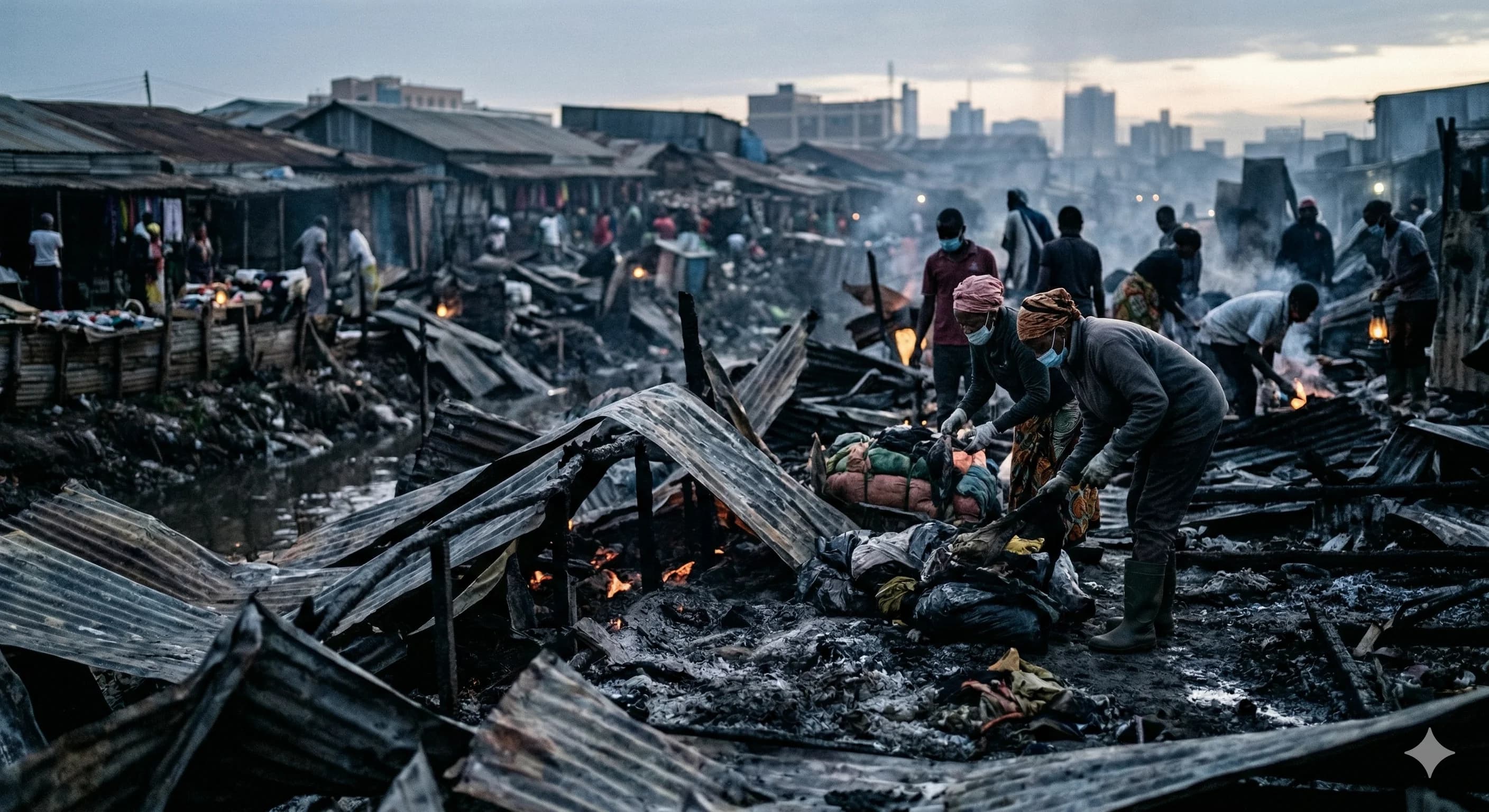
Gikomba's history is punctuated by disaster. The market has burned — partially or significantly — at least seven times in the last two decades. In August 2021, a fire tore through the market overnight, destroying an estimated KSh 150 million worth of goods and leaving hundreds of traders destitute. Three years earlier, flooding from the Nairobi River — which runs directly adjacent to the market — swept through stalls and warehouses, compounding losses.
Each time, traders have rebuilt. There is no insurance. There is no government compensation. There is only the community pulling together, pooling resources, and returning to business.
"The government does not remember us until election time," says Councillor-elect Beatrice Akinyi of the Kamukunji subcounty. "But these traders remember each other every day."
The repeated fires have sparked persistent — and so far unconfirmed — theories of arson, with some traders alleging that powerful real estate interests seeking to acquire the land are behind them. City Hall has consistently denied involvement and attributed the blazes to electrical faults and illegal cooking fires within the market. An independent investigation called for by trader associations in 2023 was quietly shelved.
In recent years, a younger generation of traders has begun to reshape Gikomba's identity. Social media — TikTok in particular — has turned secondhand shopping into a cultural statement. Young Nairobians who once might have been embarrassed to admit they shopped at Gikomba now post "thrift hauls" online with hundreds of thousands of views.
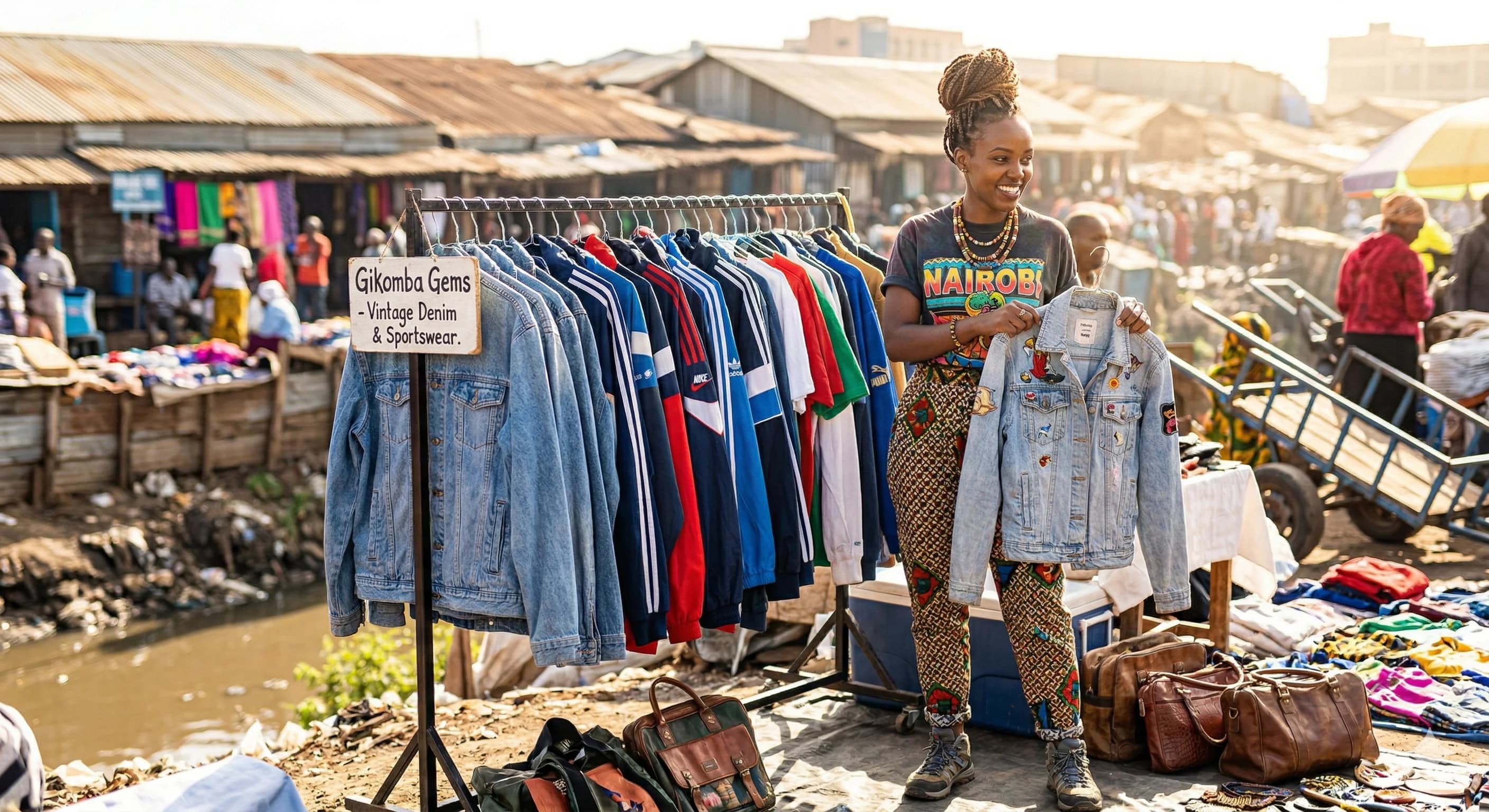
Zawadi Mutua, 24, runs a stall that barely existed three years ago. She sources vintage denim and 1990s branded sportswear, photographs them on a portable rack against a painted wall near her stall, and sells them via Instagram and Jiji. On a good week, she says, she clears KSh 18,000 in profit after costs.
"Mitumba used to carry shame," she says, straightening a rack of Levi's. "Now it carries clout."
The shift has also attracted international attention. Sustainable fashion advocates have pointed to markets like Gikomba as models of the circular economy in practice — a rebuttal to the throwaway culture of fast fashion. But some African economists and fashion critics push back on that framing.
"We are not a circular economy story for Western feel-good journalism," says Dr Pendo Owino, a political economist at the University of Nairobi. "We are a survival story. The mitumba trade also undercuts local textile manufacturing. It is complex. It is not a clean narrative."
To walk through Gikomba in full daylight is to experience Nairobi in concentrated form. Every tribe, every age, every economic class passes through. University students hunt for vintage. Mothers buy school uniforms. Small-town traders arrive on early morning buses from as far as Kisumu, Nakuru, and Mombasa, loaded with empty sacks, ready to fill them with resale stock.
The market has its own geography and social order. The inner sections, closest to the river, are for the most established traders — the ones who have held their spots for decades and would sooner part with a limb than their stall number. The outer edges are for newcomers and casual sellers. There are unofficial guilds, dispute-resolution elders, rotating credit schemes called chamas, and a hierarchy as complex as any formal institution.
"If you want to understand how Kenya really works," says longtime Gikomba observer and journalist Silas Kamau, "spend a week in this market. Every lesson is here."
"If you want to understand how Kenya really works, spend a week in this market. Every lesson is here."
The sun is fully up now. The pre-dawn quiet has given way to the market's full roar — hawkers shouting prices, wheelbarrows scraping concrete, a tailor's sewing machine rattling from somewhere deep in the maze, a child crying, a woman laughing. Somewhere, a phone plays Gengetone at full volume.
Mama Njeri is already on her third customer of the morning, holding a bolt of bright Ankara fabric against the woman's arms to check the colour against her skin.
"This one," she says, with the authority of someone who has been doing this for 22 years. "This one is you."
The woman smiles. Gikomba breathes on.
Marekebisho yenye vyanzo na majibu ya uwanjani, si mjadala wazi.
Hakuna majibu ya ushahidi bado.
Muktadha kutoka kwa majirani. Majirani waaminifu ni waliothibitishwa au wasimamizi wa kaunti.
Majadiliano
Mazungumzo na mjadala, yatafunguka ukiwa umesoma sehemu kubwa, au bofya hapa.
Maoni 0
